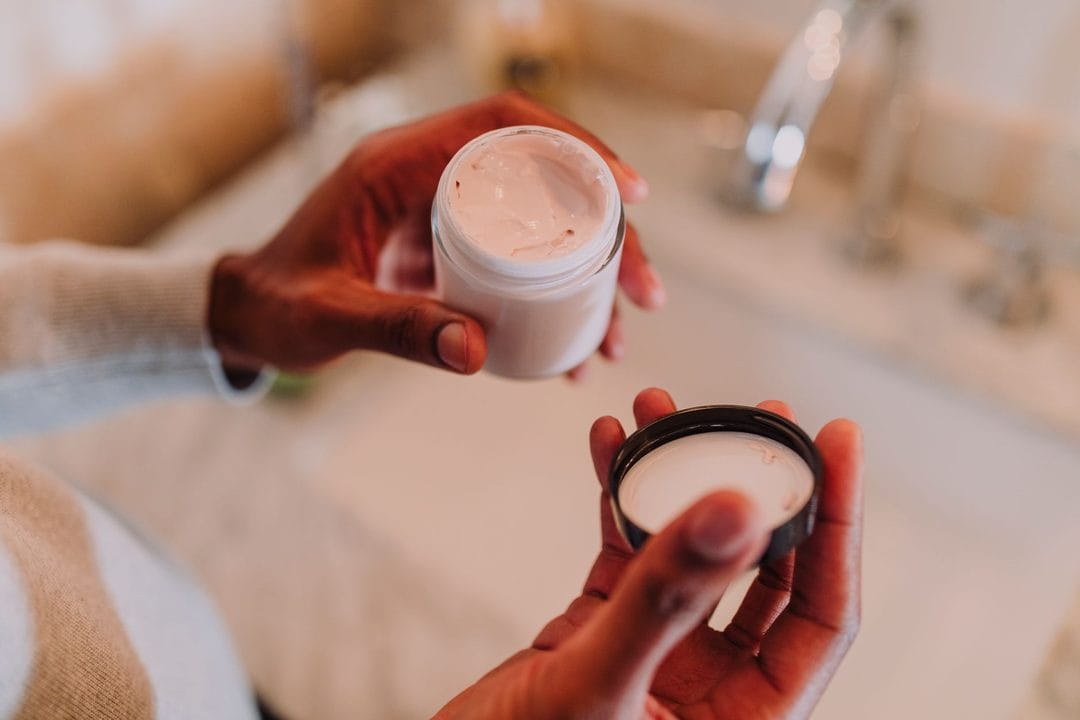
Every fall, the same complaint shows up in dermatology waiting rooms and beauty forums: skin that stings when you apply a serum, feels tight after washing, and flakes along the nose and cheeks no matter how much moisturizer you pile on. The cold air and indoor heating get most of the blame, and they do play a part. But the underlying problem is often the skin's barrier, and the ingredient most associated with rebuilding it is a lipid called ceramide. If you have been wondering whether ceramides are a genuine fix or just another line on a label, the research gives a clearer answer than most marketing does.
What ceramides actually do in your skin
The outermost layer of the skin, the stratum corneum, works like a brick wall. The bricks are dead skin cells, and the mortar between them is a mixture of lipids: ceramides, cholesterol and free fatty acids. Ceramides make up roughly half of those barrier lipids, which is why dermatologists describe them as the structural core of the barrier. When that mortar is thin or disrupted, water escapes more easily, irritants get in more easily, and the skin feels dry, rough and reactive.
Ceramides are not a single molecule. Researchers have identified a family of ceramide subtypes, and the balance between them changes with age, climate, genetics and skin condition. People with atopic dermatitis, for example, tend to have lower levels of certain ceramide types than people without the condition. That is the basis for the idea that topical ceramides can help. If the barrier is missing a component, adding it back should improve how the barrier works, at least in principle. Whether that holds up in a given product depends on the formula, which is why the next sections focus on the ratio.
The principle has been tested in clinical settings. Several studies of moisturizers containing ceramides, usually combined with cholesterol and fatty acids in a balanced ratio, have found improvements in dryness and barrier function compared with simple emollients. The results vary by product and by study population, and the effect size is modest rather than dramatic. A ceramide cream is a useful barrier repair tool, not a cure for a chronic skin disease.
Why the ratio matters more than the label
Here is where a lot of product copy gets vague. Ceramides on the ingredient list do not guarantee a working barrier repair. Researchers studying the barrier have found that ceramides work best alongside cholesterol and free fatty acids in roughly equal amounts, mirroring the skin's natural composition. A moisturizer that contains a small amount of ceramide and a lot of silicone or humectant may feel nice, but it is not rebuilding the lipid layer in the same way.
Read the ingredient list with that in mind. If ceramides appear near the top, along with cholesterol and one or more fatty acids, the formula is more likely to be built around barrier repair. If ceramides sit at the bottom of a long list, the product is probably a moisturizer with a ceramide mention for marketing. That does not make it useless, but it does mean you should not expect it to fix a compromised barrier on its own.
Ceramide creams from drugstore brands such as CeraVe are built on this balanced-lipid idea, and they are widely available at a modest price. A 16-ounce tub of the brand's moisturizing cream typically sells for under $20 at US drugstores, which makes it one of the more affordable barrier-focused products you can buy. The same logic applies to more expensive formulas from prestige brands, so compare the ratio and the amount of ceramide rather than the price tag.
How to use ceramides this fall
The simplest routine is also the most effective. Wash with a gentle, non-foaming cleanser in the morning and at night, and apply a ceramide moisturizer while the skin is still slightly damp. The damp surface traps water and helps the lipids spread evenly. If you use active ingredients such as retinol, salicylic acid or benzoyl peroxide, apply them before the moisturizer, and use them on alternate nights rather than every night until the barrier settles.
For dry hands, the same approach works. Keep a ceramide cream by the sink and apply it after every few washes, and wear cotton-lined gloves for chores that involve detergents or hot water. For a face that feels tight after cleansing, try a thicker ceramide cream at night rather than a lighter lotion. A richer product gives the barrier more lipid to work with while you sleep, and it reduces the rebound dryness that often follows a lighter formula.
Avoid stacking too many exfoliants on a compromised barrier. Two exfoliating nights a week is plenty for most people during a dry season, and a gentle lactic acid toner is a kinder choice than a grainy scrub. Physical scrubs and high-strength acids can make the problem worse, and the sting you feel is often a sign that the barrier is already thin. Wait until the skin feels comfortable again before reintroducing strong actives, and reintroduce them one at a time so you can see which product is causing a reaction.
When a ceramide cream is not enough
Some dryness is a symptom of something a moisturizer will not fix. Eczema, psoriasis and seborrheic dermatitis all cause flaking and irritation that can look like dry skin at first glance. If a patch is red, scaly, itchy or spreading, a ceramide cream may calm the surface, but it will not clear the underlying condition. A board-certified dermatologist can diagnose the problem and recommend prescription options if needed.
Watch for signs that the cause is not the weather. Persistent redness across the cheeks, burning that lasts beyond a few minutes after cleansing, or new flaking that does not respond to two weeks of consistent barrier care all point to something beyond seasonal dryness. Stop any active ingredients, keep the routine simple and book an appointment rather than adding a fourth or fifth product to the shelf.
The good news is that most fall dryness responds well to basic care. Keep the cleanser gentle, the moisturizer balanced, and the actives in check, and the barrier usually rebuilds within a few weeks. Ceramides will not transform your skin overnight, but they are one of the few ingredients with a clear mechanism and a reasonable body of evidence behind them. That is a better foundation than most trends can offer.
Pairing ceramides with other ingredients
Ceramides rarely work alone in a good formula, and the pairings are worth understanding. Humectants such as glycerin and hyaluronic acid draw water into the upper layers of the skin, which is useful when the barrier is leaky. Their effect is short-lived on their own, because water evaporates through a damaged surface. Ceramides and cholesterol hold that water in place, so the combination does more than either ingredient does by itself. That is why many barrier creams list a humectant near the top. Put simply, the other ingredients in the formula decide whether the cream repairs the barrier or only sits on top of it.
Occlusives such as petrolatum and dimethicone play a related role by slowing water loss from the surface. Petrolatum is one of the most effective occlusives in dermatology, and a thin layer over ceramide cream on very dry patches can help overnight. Use it sparingly on the face if you are prone to clogged pores, and keep it for hands, elbows and heels, where congestion is less of a concern.
Niacinamide sits in a different category. It supports barrier lipid production in several studies and is often added to ceramide products for that reason. It is well tolerated by most skin types, which makes it a reasonable companion for a sensitive barrier. The exception is the rare person who reacts to it, so introduce any new product gradually and stop if stinging begins.
Be cautious with fragrance, essential oils and alcohol-heavy toners layered under a ceramide cream. Each can sting a compromised barrier and undo the repair you are trying to achieve. A simple routine of cleanser, ceramide moisturizer and sunscreen in the morning gives the barrier the best chance to recover, and it leaves little room for reactions to creep in.
What to look for on the shelf
When you compare products, start with three checks. First, look for ceramides in the first half of the ingredient list, paired with cholesterol and a fatty acid. Second, look for a fragrance-free or low-fragrance formula if your skin reacts easily, because fragrance is a common cause of stinging on a stressed barrier. Third, look at the texture. A cream that feels slightly heavy at night is usually doing more barrier work than a light gel. Use the same three checks on every label, so the comparison stays consistent from one purchase to the next.
Avoid being swayed by claims that a product will fix everything in a week. Barrier repair takes time, and a fair test is at least two to four weeks of consistent use. Keep notes on how your skin feels in the morning, how it responds to cleansing and whether flaking improves. Those observations tell you more than any before-and-after photo.
Finally, remember that the barrier responds to what you do every day, not only to what you buy. Lukewarm water, short showers and a humidifier in the bedroom do as much for a dry face as any cream. Ceramides work best as part of that routine, and the routine is what makes the difference by the end of the season.